
The patenting process, explained simply
From the first filing through protection in your target markets: this overview walks through an example path of an invention from a European start to possible international patents.
Important: A patent application does not automatically lead to a granted patent. Which countries make sense, which deadlines apply, and which protection strategy fits depends on the invention, the target markets, and the individual case.
Phase 1: First filing and search
In the first phase, the invention is filed with the patent office. That is when the formal patenting process begins.

The invention is filed for the first time, in this example as a European patent application.
Filing establishes the filing date. That date matters because it records from when the invention is protected against later-published similar developments. From then on, the so-called priority year runs.
Why this step matters
- It creates a foundation for later filings abroad.
- It sets the reference date for many further deadlines.
The European Patent Office searches whether similar technical solutions are already known. The result is the Extended European Search Report (EESR) with an initial opinion on patentability.
What follows from that?
We review the report and decide with you whether and how to respond to objections from the patent office.
Phase 2: Internationalization
Within the first year, the decision is made whether the invention should also be protected outside Europe.
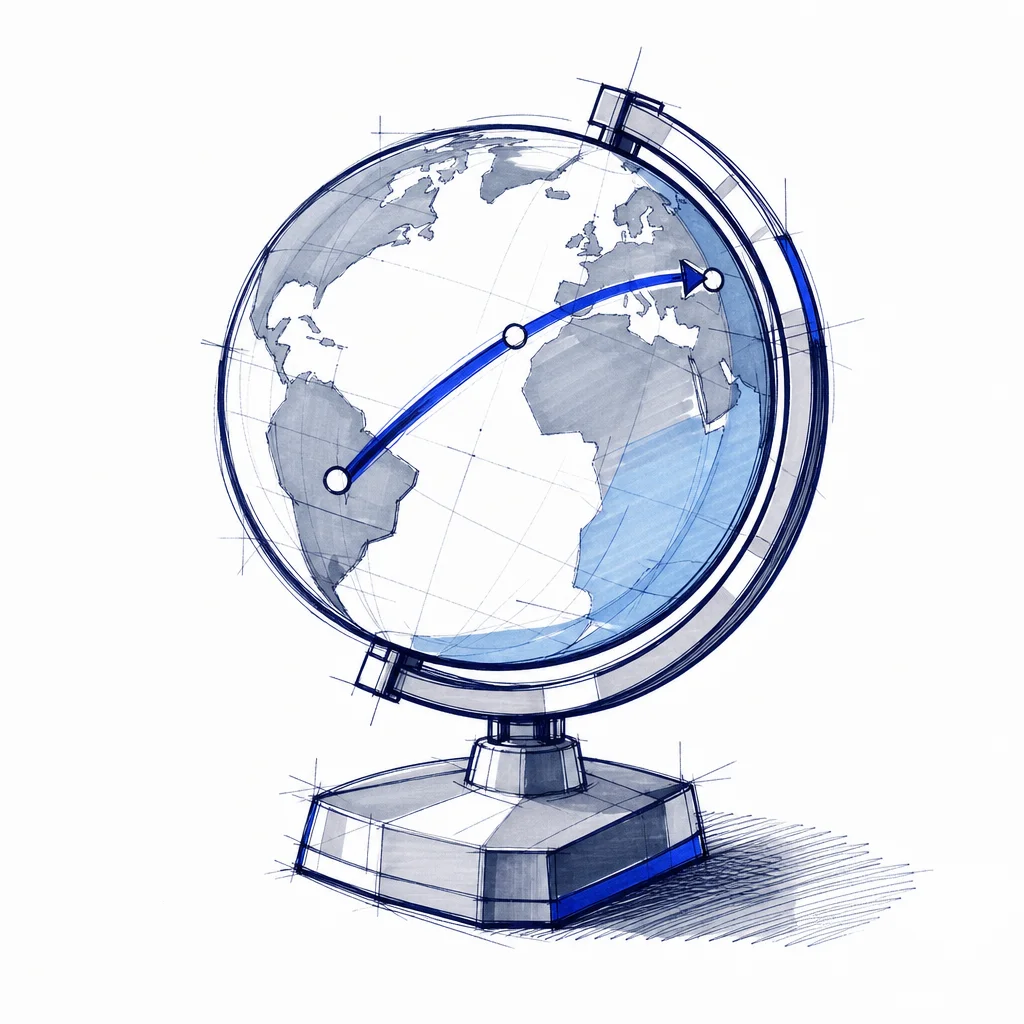
Within twelve months of the first filing, an international PCT application can be filed. PCT stands for Patent Cooperation Treaty.
A PCT application is not a "world patent." It also does not replace later patent filings in individual countries. It does bundle the international start: instead of filing separately in many countries within the first year, you keep the option open to select later from more than 150 countries with purpose.
Why this option can make sense
- It creates extra time for market, technology, and funding decisions.
- Country-specific costs usually arise only when entering the national or regional phase.
Further information on the WIPO PCT system
Phase 3: The application becomes public
After 18 months, the invention is usually no longer confidential.

The patent application is normally published 18 months after the earliest filing date. After that it can be searched in databases such as PATENTSCOPE.
With publication, the technical content becomes accessible to everyone. Others can see which solution was filed. Publication can also prevent the same technical idea from being effectively filed again later.
Important: Publication is not yet a patent grant. Examination can continue; the patent may later be granted, limited, or refused.
Phase 4: Select countries and regions
Now the international application becomes a concrete IP strategy for the markets where the patent should take effect.

By the relevant deadlines, the PCT application is continued in the selected countries or regions, for example in the USA, Europe, or China. Depending on the country, fees, translations, and local representation are typically required.
From this point, the international option becomes a concrete country portfolio. Protection is not continued automatically everywhere: for each desired country or region, the local requirements must be met.
What should be considered when selecting?
- Where are the most important production and sales markets?
- In which countries are relevant competitors active?
- Which countries matter most for investors, collaboration partners, or later commercialization?
- How do the expected costs compare with the business benefit?
Via the link below you can find more information on WIPO national phase deadlines.
Note: Deadlines can differ by country or region. They must be checked for the specific case.
Phase 5: Examination and grant
The selected patent offices examine the application. After a positive decision, a patent can be granted.

The competent patent office examines in particular whether the invention is new, involves an inventive step, and is industrially applicable.
The patent office compares the application with the known prior art. It often raises questions or objections. You can respond in writing within set deadlines and, where appropriate, amend the application.
Possible outcomes
- The patent is granted.
- The claims are limited and the patent is granted in an adapted form.
- The application is refused or not pursued further.
If the European application is granted by the European Patent Office (EPO), an important decision arises for protection in Europe: Should a Unitary Patent, a classic bundle patent, or a combination of both routes be used?
A Unitary Patent is a European patent granted by the EPO for which unitary effect is requested. It provides uniform protection in the EU member states participating in the Unitary Patent system at the time of registration.
Instead of validating and administering the patent separately in several participating states, a single request creates uniform protection for that group of states.
When can this option make sense?
- When protection is needed in several participating EU states.
- When a more uniform administration and fee structure for those states is advantageous.
Please note: The Unitary Patent does not apply automatically in all European countries. For non-participating states, such as the United Kingdom, Switzerland, or other states outside the system, national validations remain required.
A bundle patent arises when a granted European patent is validated in the desired individual states. After that, a national patent exists in each of those states.
The European patent is first the common basis. After grant, it becomes a separate national IP right in each selected country.
When can this option make sense?
- When protection is needed only in selected European countries.
- When important target states do not participate in the Unitary Patent system.
- When IP rights should be administered or enforced separately by country.
Depending on the target markets, a Unitary Patent for participating EU states can be combined with national validations in further countries. Which solution fits should be reviewed before grant, because deadlines apply.
For countries outside Europe, such as the USA, proceedings continue before the respective national patent offices.
Each office decides independently on the application. A positive outcome in Europe does not automatically mean a patent grant in the USA, China, or other countries. Proceedings can take different lengths of time and lead to different results.
Phase 6: Maintain and use the patent
With grant, the commercially most important phase begins: the patent can be enforced against infringers. The granted patent gives the owner the right to prohibit use by anyone without usage rights.

A patent can generally be maintained for up to 20 years from the filing date or the date of a subsequent application. The prerequisite is that the required annual or maintenance fees are paid on time.
A patent also needs active maintenance. If due fees are not paid, protection can end early. After the term expires, the invention may generally be used by others.
What can matter during the term
- Monitor fees and deadlines.
- Watch the market and competitors.
- Plan licenses, collaborations, or your own product use.
- Check whether the patent portfolio still fits the company strategy.
Good to know
Patent proceedings take time: several years can pass from the first filing to grant.
IP rights are territorial: a patent only has effect where it is filed, granted, and maintained.
The timings in this overview are typical points of orientation. For concrete deadlines, costs, and decisions, individual advice is required.
Important: This page is general guidance and not legal advice. For a filing strategy tailored to technology, markets, and deadlines, our patents team can help.
Talk to an expert
Our experts are happy to advise you in person and help with the next steps.

Glossary
Filing date / priority
The date of the first filing. It is often the decisive reference date for what counts as earlier prior art, and it triggers important follow-on deadlines.
EPA
European Patent Office (EPO). It examines European patent applications and grants European patents.
EESR
Extended European Search Report. It contains search results and an initial opinion from the European Patent Office.
National or regional phase
The stage of proceedings in which a PCT application is continued before the patent offices of the specifically selected countries or regions.
PCT application
An international patent application under the Patent Cooperation Treaty. It simplifies the international start but does not grant a worldwide patent.
Prior art
Everything that was publicly known before the relevant filing date. This includes any kind of prior publication, such as patent documents, journal articles, websites, or products.
Validation
A formal step after grant of a European patent through which the patent takes effect in a selected country.