
Dual‑Acting T Cell Platforms for Cancer Therapy

Challenge and innovation
Heterogeneous and antigen‑switching tumors can evade single‑target CAR approaches, while immunosuppressive microenvironments promote T cell exhaustion and loss of effector function. At the same time, limited persistence and metabolic deprivation of modified T cells, together with low‑titer, variable viral vector production, hinder robust, scalable and economically viable manufacturing of advanced T cell therapies.
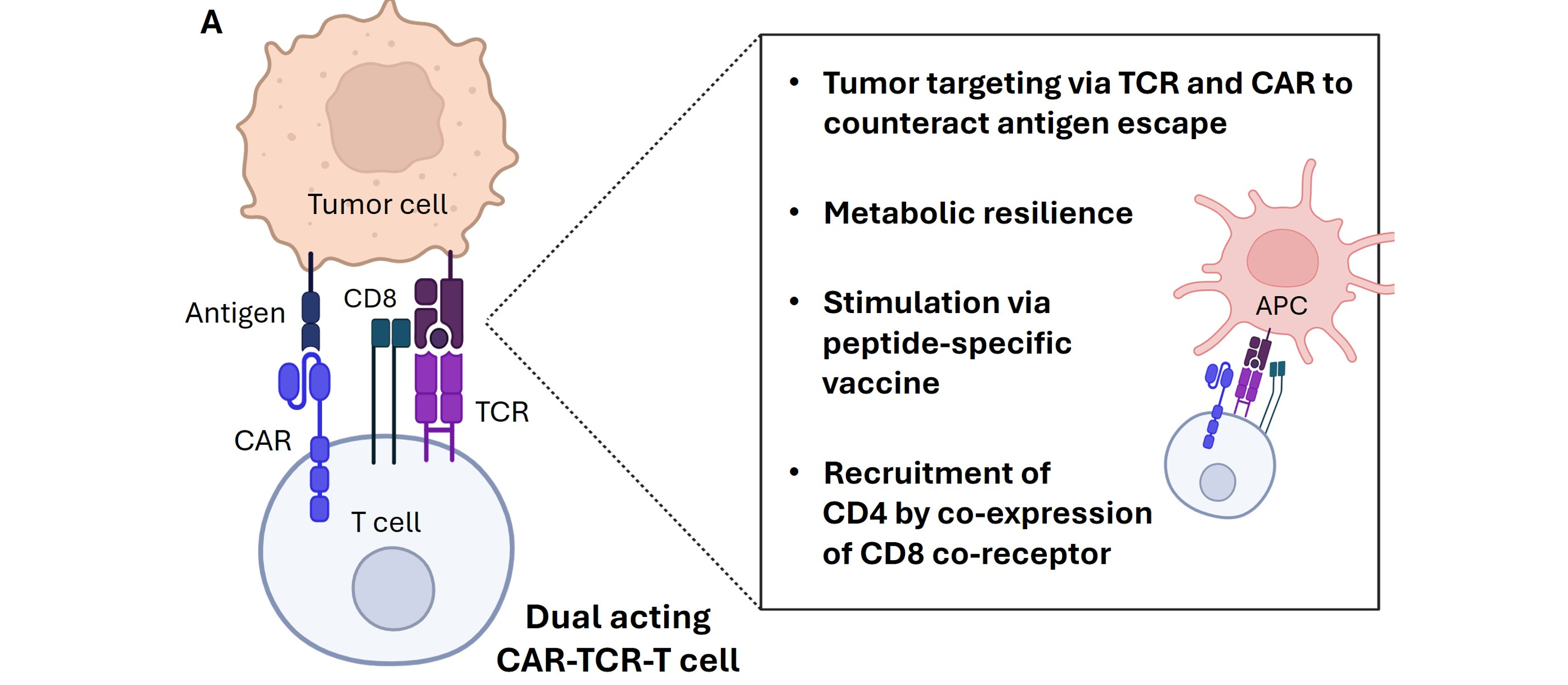
The technology introduces a dual‑acting T cell platform in which a single γ‑retroviral vector drives co‑expression of a CAR and a transgenic TCR, enabling robust, multi‑antigen targeting with improved persistence and metabolic fitness. An optimized 5′LTR architecture is combined with pharmacological enhancement of producer cell lines to increase viral titers and transduction efficiency, enabling more consistent, scalable generation of advanced cell therapies.