
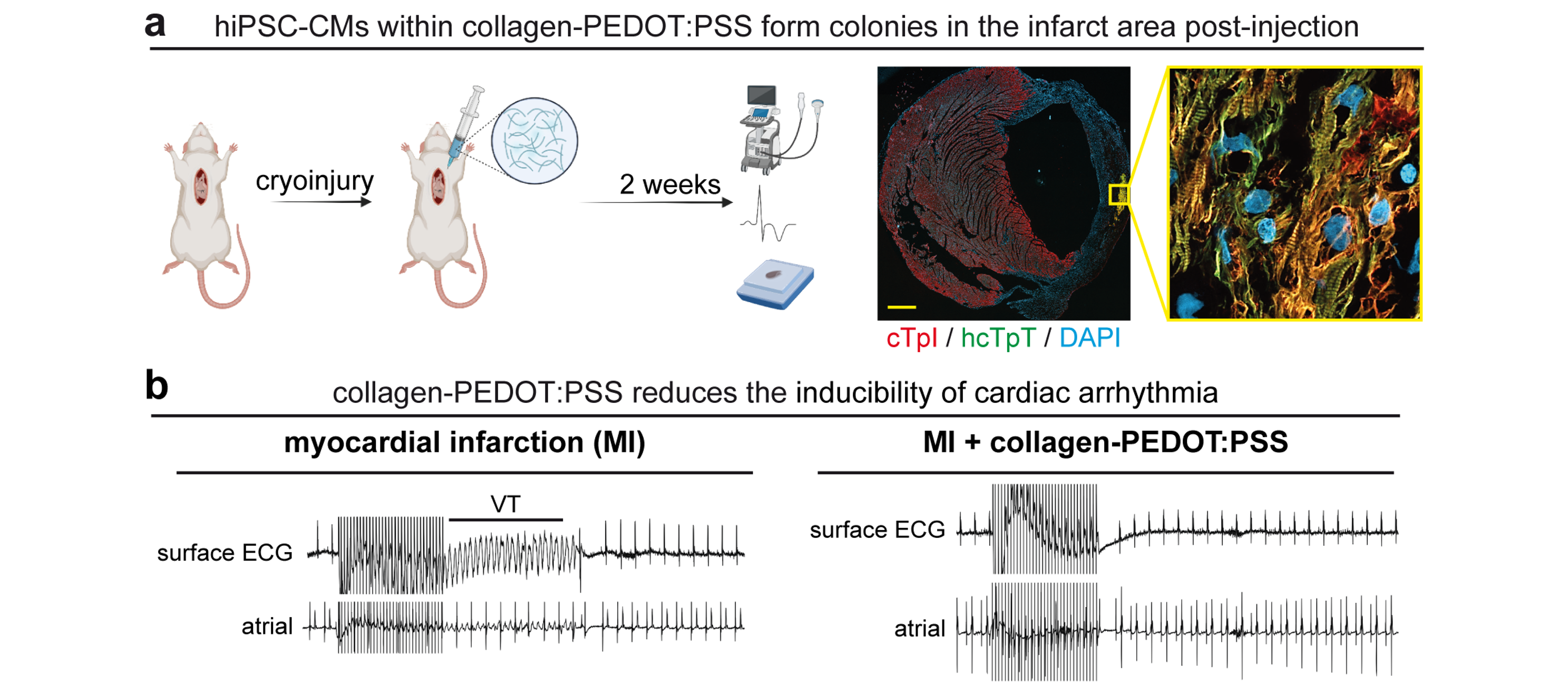
Hydrogel prevents post-infarct cardiac arrhythmia

Challenge and innovation
Current therapies for post-infarct cardiac repair are unable to restore lost tissue or reliably prevent arrhythmias. Implantable devices only treat the symptoms but they do not heal the tissue. Drug therapies are only partially effective and can cause side effects. There is an urgent need for new, cell-compatible materials to enable lasting heart regeneration and electrical stability.
This technology combines collagen and PEDOT:PSS to create an injectable, electrically conductive hydrogel that mimics native heart tissue. Unlike standard biomaterials, it restores electrical conductivity in damaged areas and allows ensures safe integration of stem cell-derived cardiomyocytes and effectively restores electrical conductivity in damaged areas. The hydrogel prevents arrhythmias, supports cell therapy, and enables true cardiac tissue regeneration—setting a new standard for post-infarct treatment.

Talk to an expert
Interested in learning more about this technology offer, exploring potential applications or discussing a possible collaboration? Get in touch to learn more.