
Macrocyclic Anti-Amyloid Peptides

Challenge and innovation
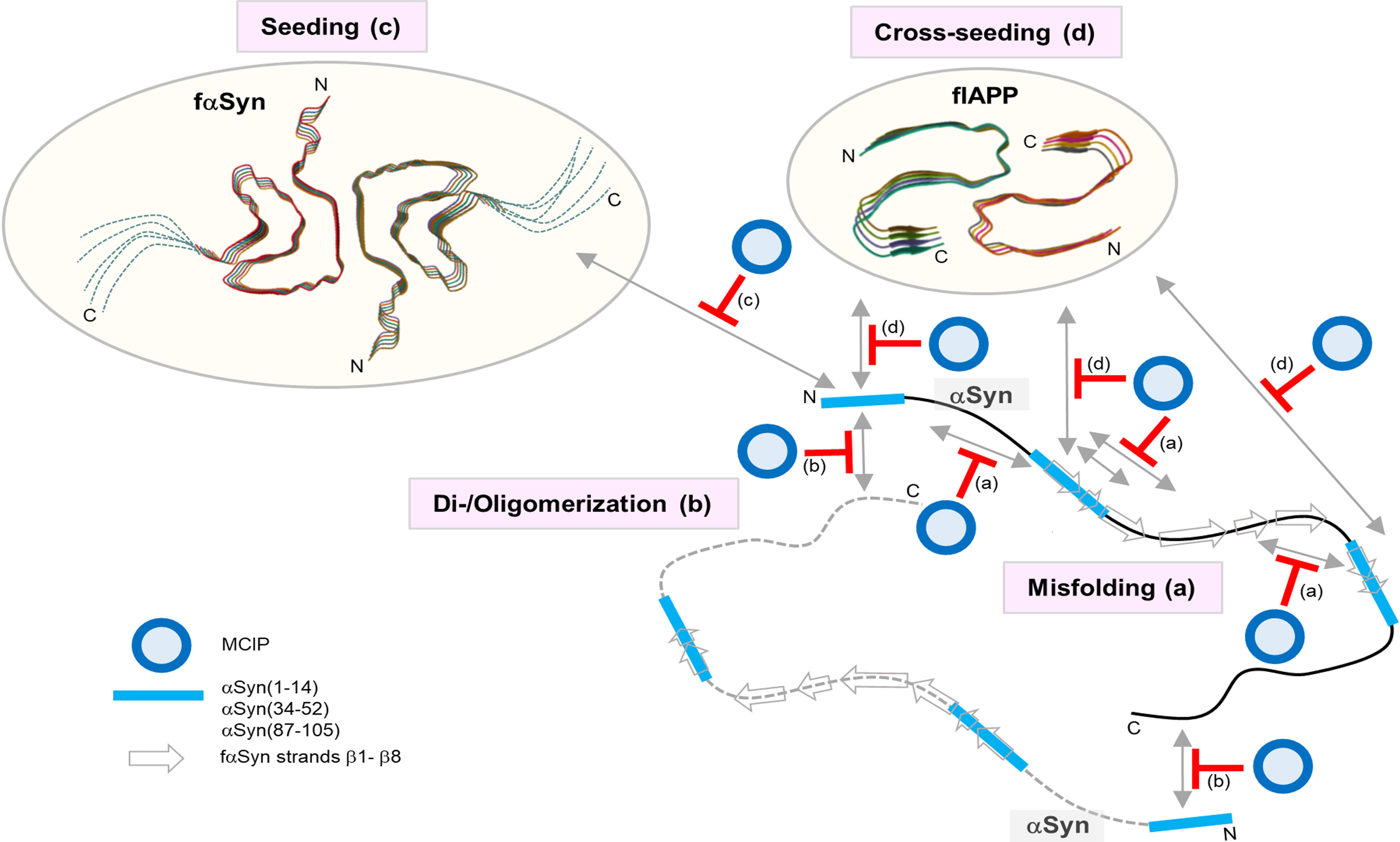
AD-and PD-related neurodegeneration in the brain are linked to the self-assembly of Aß and a-Synuclein while T2D-related pancreatic beta-cell degeneration is linked with amyloid self-assembly of IAPP. Cross-seeding interactions between different amyloid polypeptides/proteins have emerged as possible molecular links between various different cell-/neurodegenerative diseases. Molecules that suppress both amyloid self-assembly and cross-seeding are urgently needed, however.
The results suggest that the anti-amyloid function of MCIP 2 b and 2 e is mediated via interactions with αSyn via three αSyn segments identified as key sites of both αSyn self- and its cross-interactions with IAPP. MCIP 2b and 2 e are also able to block Aβ42-mediated cross-seeding of αSyn. Based on their broad spectrum amyloid inhibitor activity and additional drug-like properties, MCIPs are promising leads for multifunctional anti-amyloid drugs in PD, T2D, AD, and their comorbidities. The identified key αSyn segments shall serve as valuable targets for the design of novel, multi-site targeting molecules as effective anti-amyloids in PD and related synucleinopathies.

Talk to an expert
Interested in learning more about this technology offer, exploring potential applications or discussing a possible collaboration? Get in touch to learn more.