
Novel Immunotherapy Targeting Fibrillary ApoE4

Challenge and innovation
Amyloid-targeting therapies address downstream pathology and leave plaque-initiating processes unresolved. Moreover, APOE4 carriers are often excluded because of high risk of side effects, especially ARIA. ApoE4 substantially increases risk and accelerates the onset of late-onset AD, but ApoE is required for physiological lipid metabolism and neuronal support. Broad ApoE inhibition may compromise normal protein function and create safety challenges. A selective strategy for pathogenic ApoE4 species is needed.
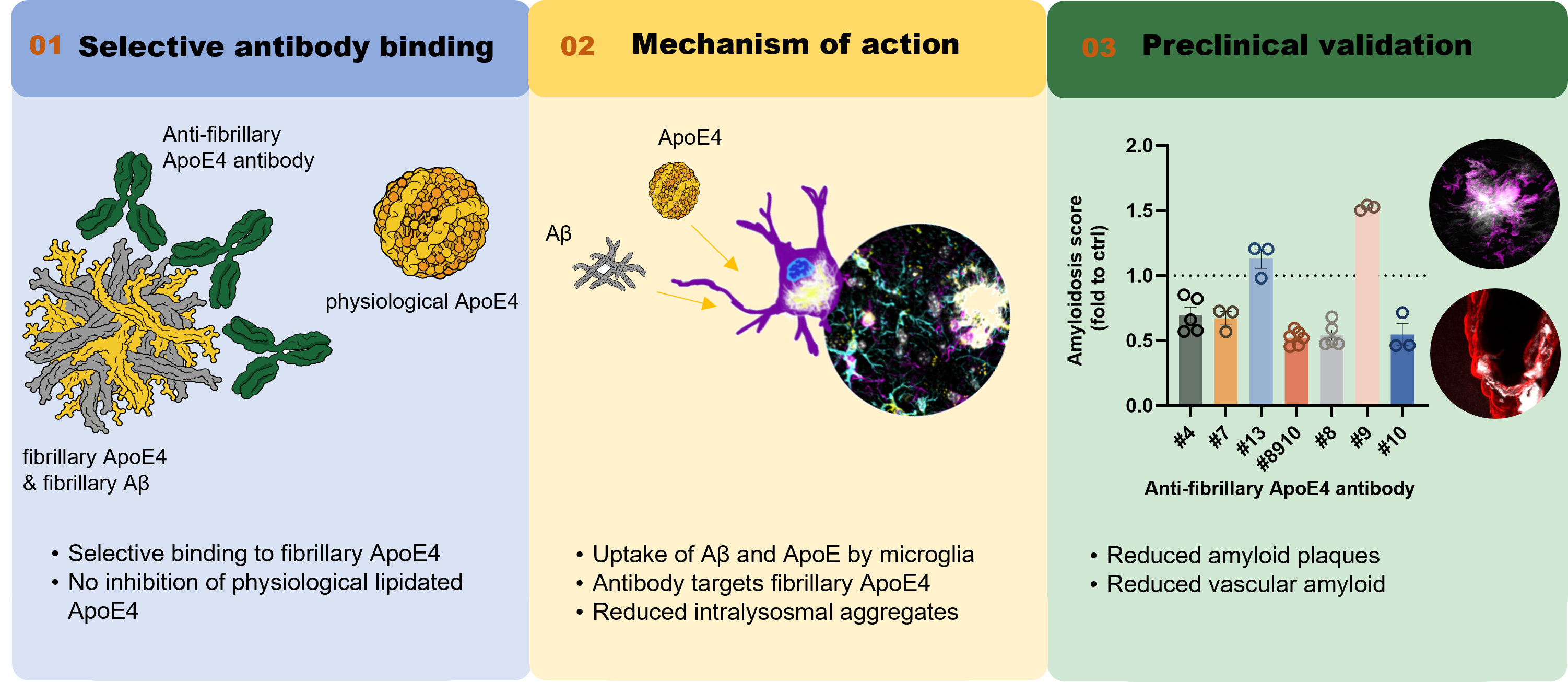
The technology is based on the discovery that fibrillary ApoE aggregates act as microglial seeds for Aβ amyloidosis. It enables active or passive immunotherapies directed specifically against the pathological fibrillary ApoE4 conformation rather than total ApoE4. In transgenic AD mice expressing human ApoE4, vaccination reduced brain fibrillary ApoE4 and amyloid plaques while preserving plasma ApoE4. This creates a potential precision-immunotherapy platform for ApoE4-associated AD.

Talk to an expert
Interested in learning more about this technology offer, exploring potential applications or discussing a possible collaboration? Get in touch to learn more.