
Novel clinical biomarker for hepatic steatosis

Challenge and innovation
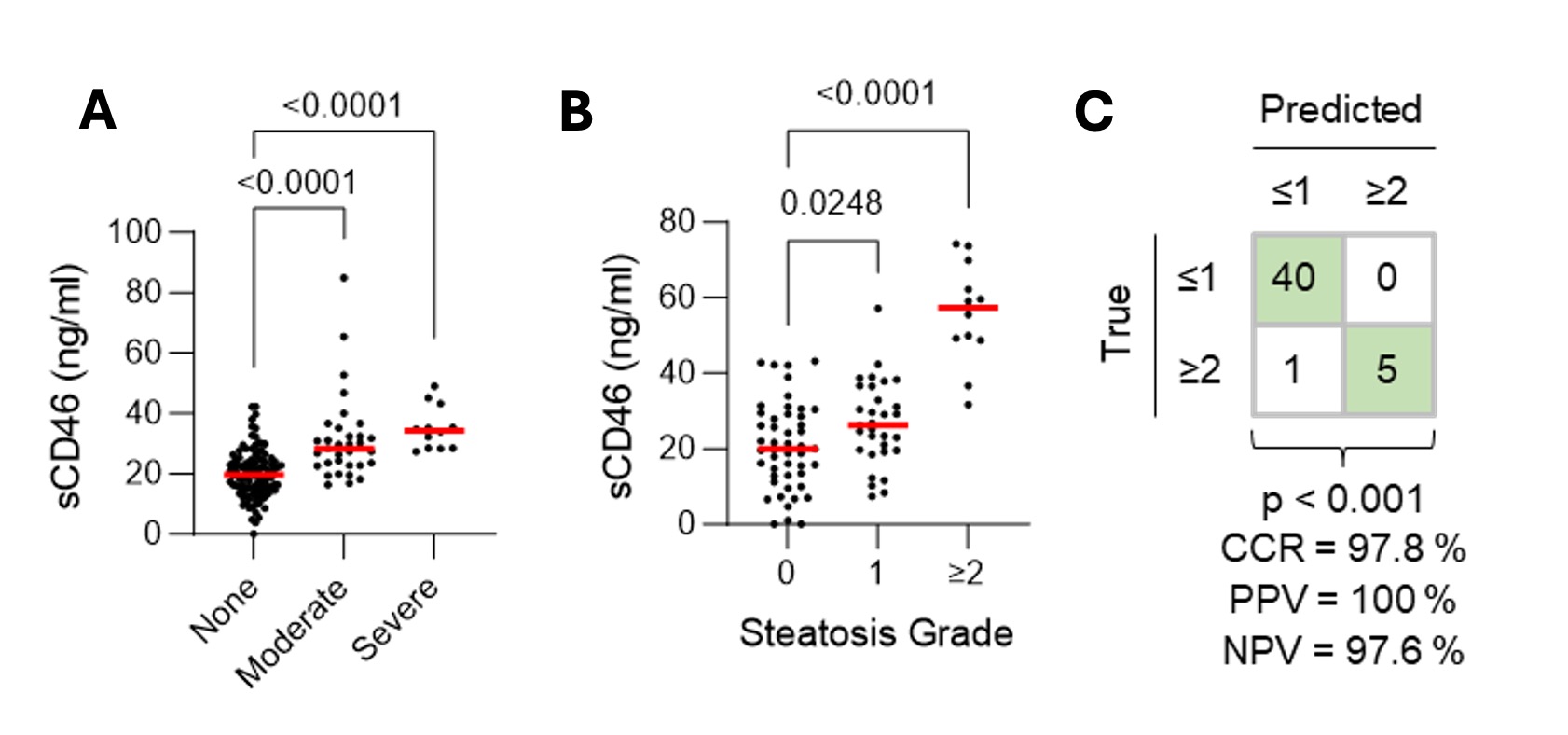
Fatty liver disease constitutes a significant challenge in modern healthcare. Early stage intervention improves prognosis, but there is a lack of cost-effective and noninvasive diagnostic tests for detecting and staging hepatic steatosis. Presently, diagnosis depends on resource-intensive imaging by abdominal ultrasound or MRI, which sometimes must be followed up by liver biopsy.
Shedding of CD46 from hepatocytes into circulation reflects a stress response of hepatocytes to fat loading, which appears to be connected with activation of innate-like lymphocyte responses; therefore, soluble CD46 is unlike other established clinical liver markers by measuring a different type of hepatocyte property indicating cell injury, synthetic function, detoxifying activity, fibrosis or systemic inflammation. Soluble CD46 is a promising clinical marker of patients with steatosis at risk of developing early liver inflammation, a prevalent subset that could benefit from earlier clinical detection and intervention.

Talk to an expert
Interested in learning more about this technology offer, exploring potential applications or discussing a possible collaboration? Get in touch to learn more.