
The link between cardiac disease and sleepless nights

Challenge and innovation
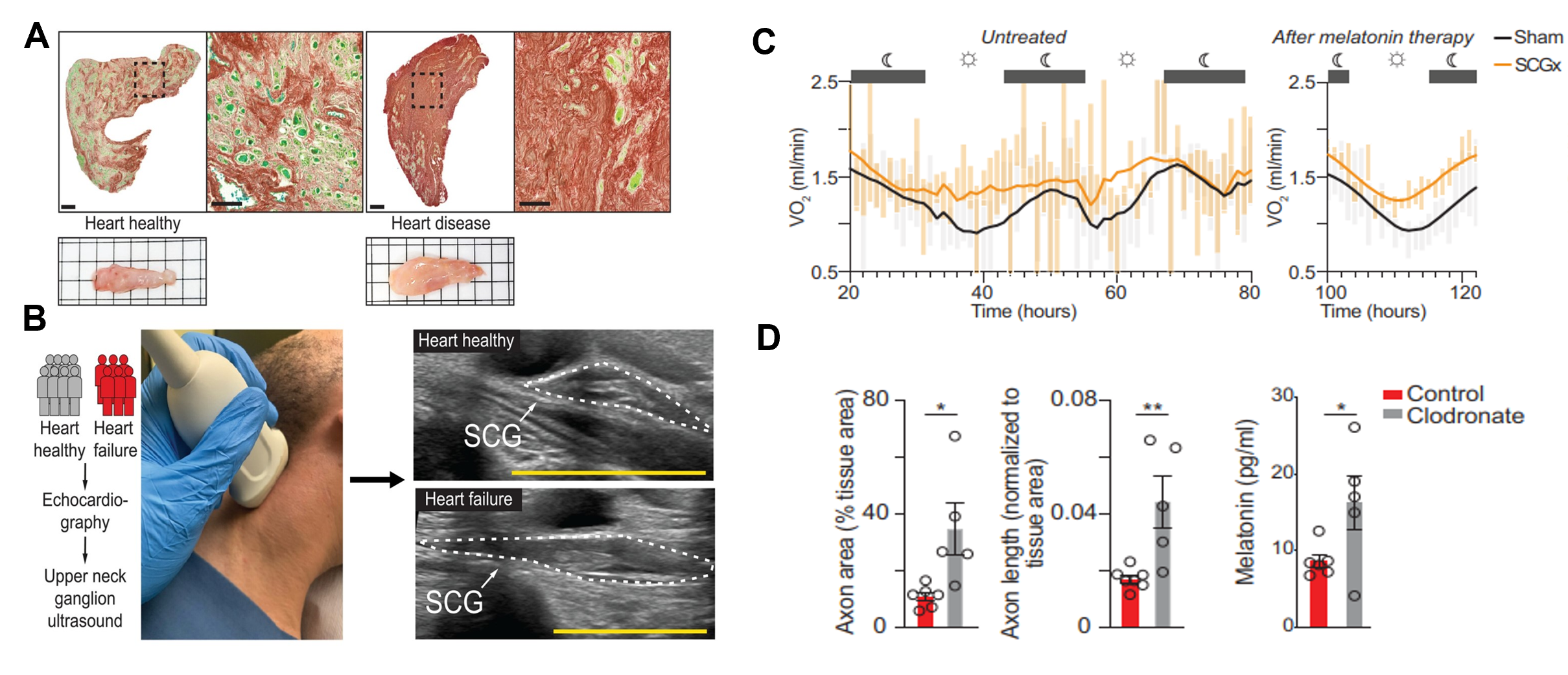
One third of heart disease patients suffer from sleep problems and have low melatonin levels. Its synthesis occurs in the pineal gland and is, together with its secretion, controlled by sympathetic neurons that project from the SCG. The mechanism underlying the altered sleep-wake cycle in cardiac disease has remained elusive and there is no consensus as to the treatment. Interestingly, the SCG harbors heart-innervating neurons in addition to pineal gland-innervating neurons but its role has not been addressed yet.
The data presented here revealed severe and likely irreversible immune-mediated destruction of sympathetic axons in pineal glands from humans and mice with cardiac disease . Spatial, single-cell, nuclear, and bulk RNA sequencing traced this defect back to the SCG, which responds to cardiac disease with accumulation of inflammatory macrophages, fibrosis, and selective loss of pineal gland–innervating neurons. Macrophage depletion in the SCG prevented disease-associated denervation of the pineal gland and restored physiological melatonin secretion identifying the mechanism by which diurnal rhythmicity in cardiac disease is disturbed and suggesting a target for therapeutic intervention.

Talk to an expert
Interested in learning more about this technology offer, exploring potential applications or discussing a possible collaboration? Get in touch to learn more.