
Anti-SEMA7A for the treatment of post-ischemic tissue damage

Challenge and innovation
Current treatment options for reperfusion injury are limited and mainly include ischemic preconditioning, antioxidant therapies and anti-inflammatory medications. However, these approaches show only moderate efficacy and cannot specifically target the complex thromboinflammatory processes triggered by platelet-neutrophil complexes. New therapeutic approaches are urgently needed because despite successful reperfusion, up to 50% of patients still suffer significant myocardial damage.
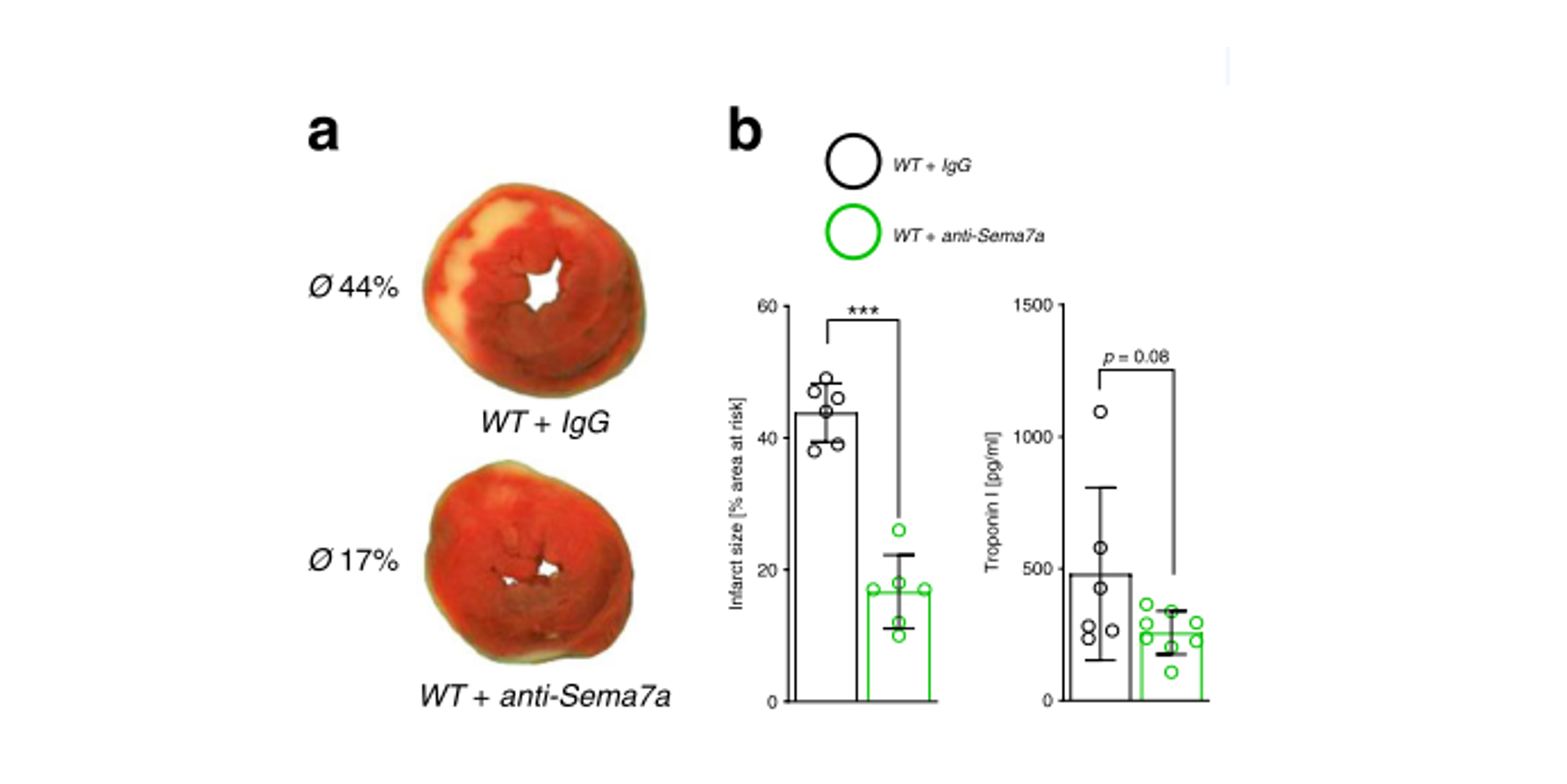
The invention is based on the observation that platelet – neutrophil complexes (PNCs) are increased in patients with acute myocardial infarction and that this is associated with increased levels of neuronal guidance protein semaphorin 7A (SEMA7A). By inhibiting SEMA7A, the myocardial tissue can be protected from reperfusion injury. SEMA7A inhibition offers for the first time a specific molecular target to interrupt the pathological interaction between red blood cells, platelets, and immune cells, thereby significantly reducing the extent of reperfusion injury.

Talk to an expert
Interested in learning more about this technology offer, exploring potential applications or discussing a possible collaboration? Get in touch to learn more.