
TMEM16A inhibitors as a Polycystic kidney disease (PKD) treatment option

Challenge and innovation
The standard treatment for early stages of PKD is usually symptomatic. Approximately 50% of ADPKD patients require dialysis treatment before the age of 60 , which is associated with reduced life expectancy. While a recently approved vasopressin antagonist has been shown to reduce cyst growth, dialysis and kidney transplantation are still required in advanced stages of PKD. Therefore, therapeutic options for delaying or preventing dialysis and targeting the advanced stages of PKD, are urgently needed.
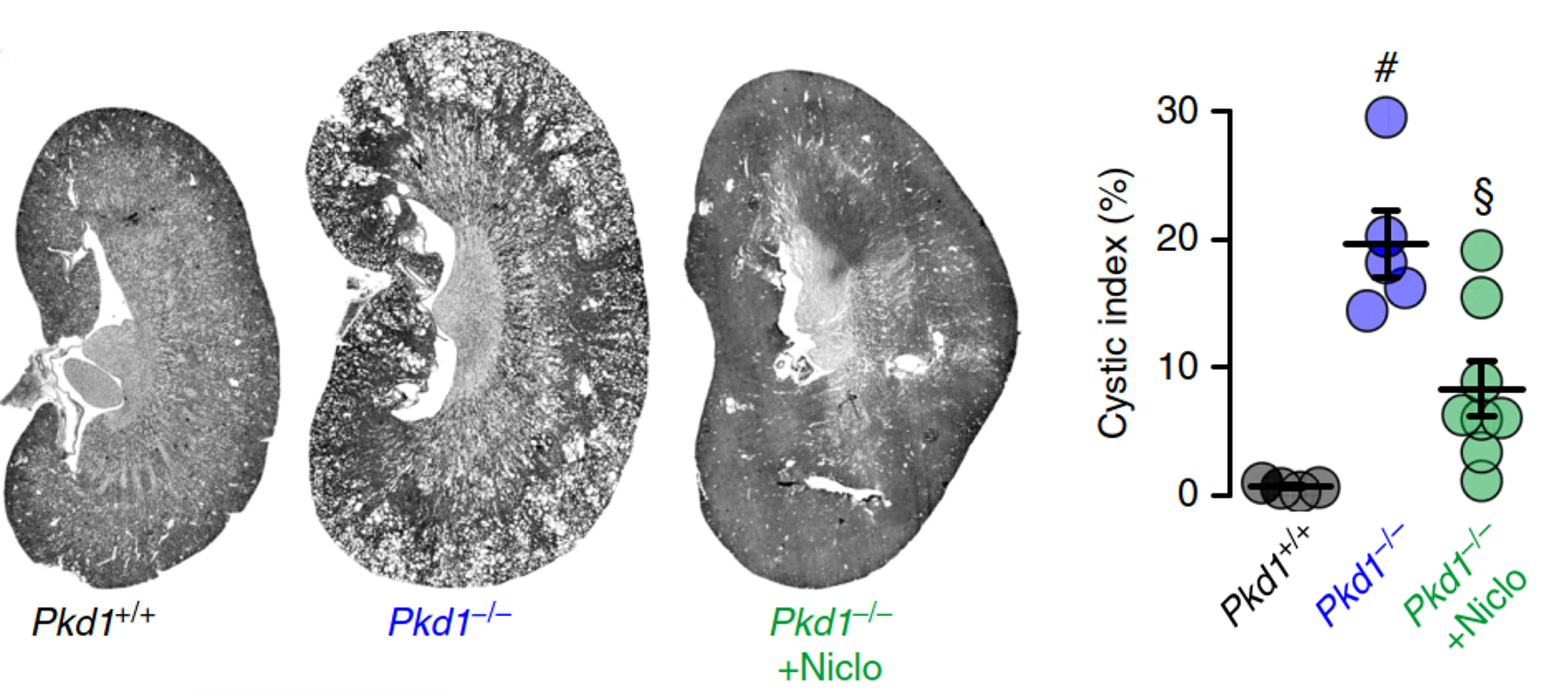
The Ca2+-regulated chloride ion channel TMEM16A is central to ADPKD. Inhibition of TMEM16A by inhibitors such as the FDA-approved and well-tolerated drugs niclosamide and benzbromarone largely suppress cyst development, as demonstrated in preclinical studies in-vivo. A large number of patients would be likely to benefit from this novel therapeutic concept for the treatment of ADPKD. It could strongly reduce the costs for public health care and lower the patient’s burden caused by invasive medical treatments.

Talk to an expert
Interested in learning more about this technology offer, exploring potential applications or discussing a possible collaboration? Get in touch to learn more.