
Point-of-care blood test for early sepsis diagnosis

Challenge and innovation
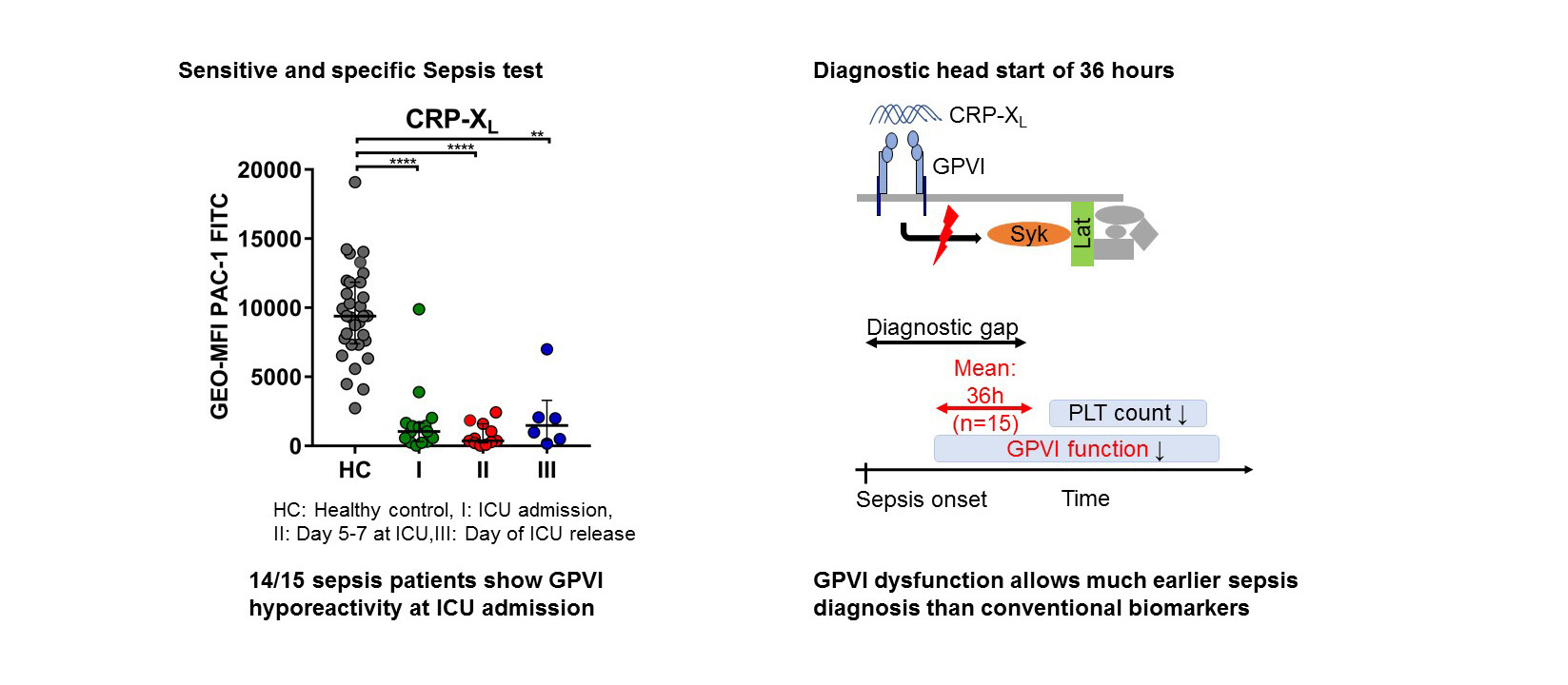
Clinicians urgently need better tools for early sepsis detection and severity stratification. Each hour of delayed diagnosis increases mortality, yet standard markers (CRP, PCT, lactate) and scores often identify sepsis only after organ dysfunction is established and poorly discriminate patients at risk of septic shock. This leads to late ICU admissions, suboptimal triage and avoidable deaths, particularly in overcrowded emergency rooms and hospital wards.
The invention provides a functional platelet‑based sepsis IVD that measures GPVI‑mediated activation defects in full blood after stimulation with defined agonists. Using standard methods (aggregometry, FACS, ELISA), the assay clearly separates sepsis from non‑septic infection and healthy controls and shows a robust shift between sepsis and septic shock. In a 250‑patient study it outperformed CRP, PCT and lactate, enabled diagnosis up to 36 hours earlier, and GPVI dysfunction correlated significantly with disease severity, supporting use for early diagnosis and risk stratification.

Talk to an expert
Interested in learning more about this technology offer, exploring potential applications or discussing a possible collaboration? Get in touch to learn more.