
Rotating reactor for heterogeneous transfer of substances

Challenge and innovation
Conventional bed reactors consist of a rotating cylinder filled with solid particles, which is continuously flushed with the liquid to be treated. If the particles are too small, the centrifugal forces form a dense bed of solids through which the liquid medium can hardly diffuse. Thus, the particle size of current systems is limited and very small particles tend to be carried along with the flow of the liquid phase material and impair the relative movement between the different materials.
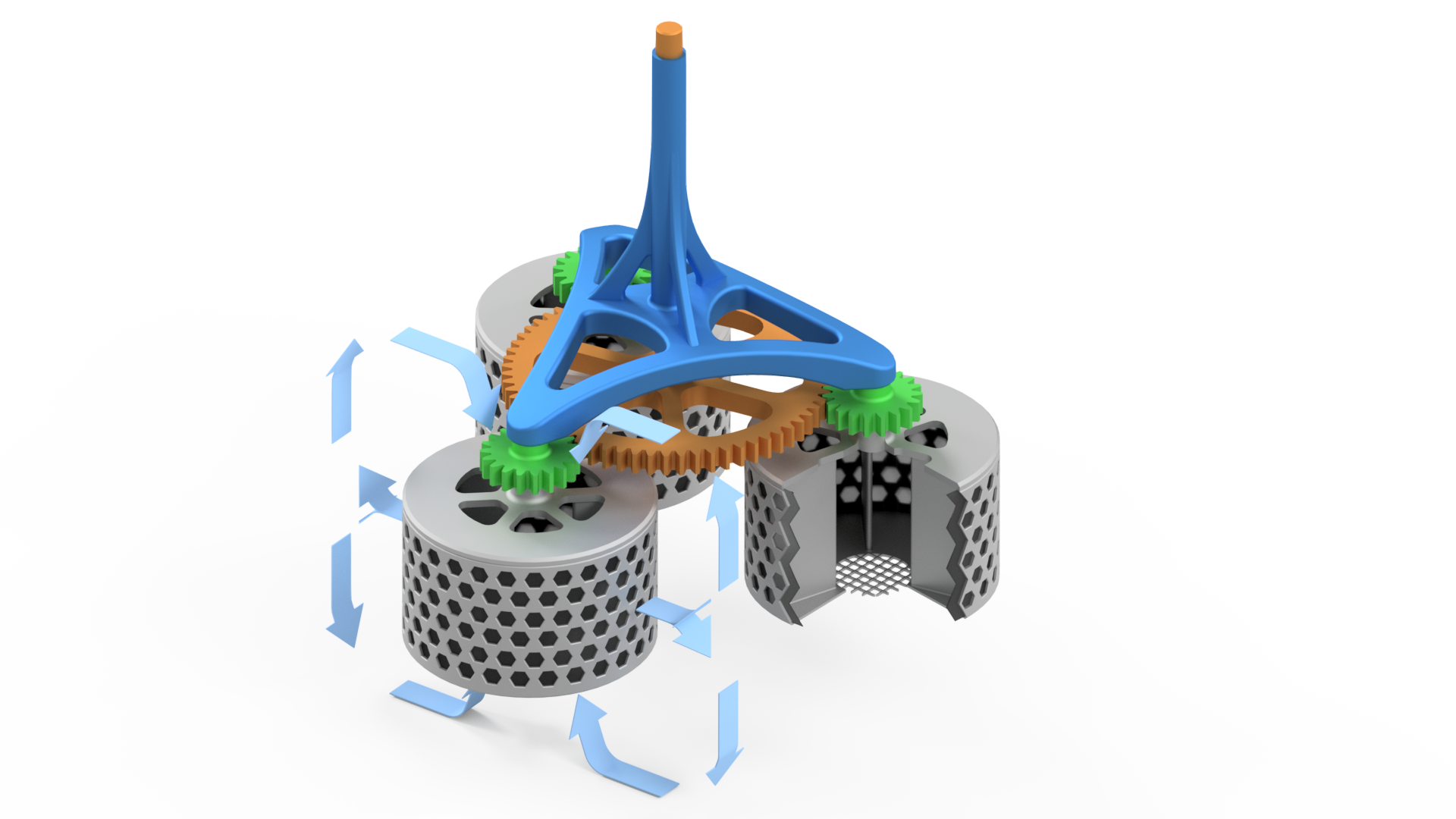
The rotating reactor is configured like a planet-sun system . It comprises a flow distributor and a drive unit, with the flow distributor configured to submerge in a fluid medium and to generate a flow of the fluid by rotating around the rotation axis and the drive unit configured to move the flow distributor perpendicular to the rotation axis. This configuration positively affects the rate of the mass transfer reaction . The reactor does not require additional valves, pumps or pipeworks for controlling circulation, transition or percolation of the fluid medium through the containment of the solid reactant and is fully compatible for the use of very small particles.

Talk to an expert
Interested in learning more about this technology offer, exploring potential applications or discussing a possible collaboration? Get in touch to learn more.